
Warning: This article contains spoilers for Episode 2 of Marvel’s VisionQuest, titled “Theseus.”
The second episode of VisionQuest has quite a bit to unpack. Not only does “Theseus” finally reveal what happened to Tommy Shepherd before he became connected to the Maximoff family, but it also delivers a major loss for Vision that could change the course of the series. The Paul Bettany-led show continues to explore the fallout from Agatha All Along, picking up the thread of Billy Maximoff’s attempt to bring his twin brother back by placing his soul inside another boy’s body. And as Tommy’s past begins to make sense, Vision finds himself facing a new problem inside his own mind.
Tommy, played by Ruaridh Mollica, has had a rough start to life. As reported by ComicBookMovie.com, he grew up in foster care and nearly died after a group of bullies held him underwater. After being revived, he began sensing another consciousness inside his head. The experience became so overwhelming that he suffered a breakdown and was admitted to St. Mabyn’s psychiatric facility. It was there that he met Lisa Molinari. The two eventually made their escape after Tommy’s super-speed first emerged during a confrontation with a guard carrying an electric baton.
This backstory adds a much darker edge to the return of Wanda Maximoff’s sons. Agatha All Along spent much of its time following Billy as he tried to understand his connection to William Kaplan, but Tommy’s experience shows just how frightening that kind of identity crisis can be. He isn’t simply a teenager discovering that he has superpowers. He’s someone who’s already been through a near-death experience and is now struggling to understand why his own mind doesn’t feel entirely like his. That makes his story a natural fit alongside Vision’s ongoing questions about who he is and what parts of his past still define him.
J.A.R.V.I.S. Makes the Ultimate Sacrifice as Ultron Returns
Tommy’s story isn’t the only major development in “Theseus.” The episode also reveals more about Paladin, the man who kidnapped Tommy to draw Vision out of hiding. Paladin belongs to a secret group of bounty hunters who treat their contracts as something that must be fulfilled at any cost. That makes his pursuit of Vision more than just another job, and things become particularly dangerous once Vision arrives at St. Mabyn’s to rescue Tommy.
Vision fights his way through Paladin’s men, only to discover that the bounty hunter has adamantium bullets. The metal has already made its way into the MCU through Captain America: Brave New World, and here it proves to be a serious threat to a synthezoid like Vision. The injuries leave him in desperate need of help, forcing the artificial intelligences living inside his mind to intervene.
That’s when J.A.R.V.I.S. makes his choice. The AI, once Tony Stark’s trusted digital assistant, permanently deletes his own program to give Vision the time he needs to recover. It’s a painful moment, particularly for anyone who’s followed the MCU since the beginning. J.A.R.V.I.S. was there from the first Iron Man in 2008, helping Tony build and operate his technology long before he became part of Vision’s creation in Avengers: Age of Ultron.
His death feels like the end of a small but important part of Marvel’s history. J.A.R.V.I.S. wasn’t always at the center of the action, but he was woven into the story of how Tony became Iron Man and how Vision came to exist. Now, his sacrifice gives Vision another chance to continue his journey, but it comes at a cost that goes well beyond losing a helpful voice inside his head.
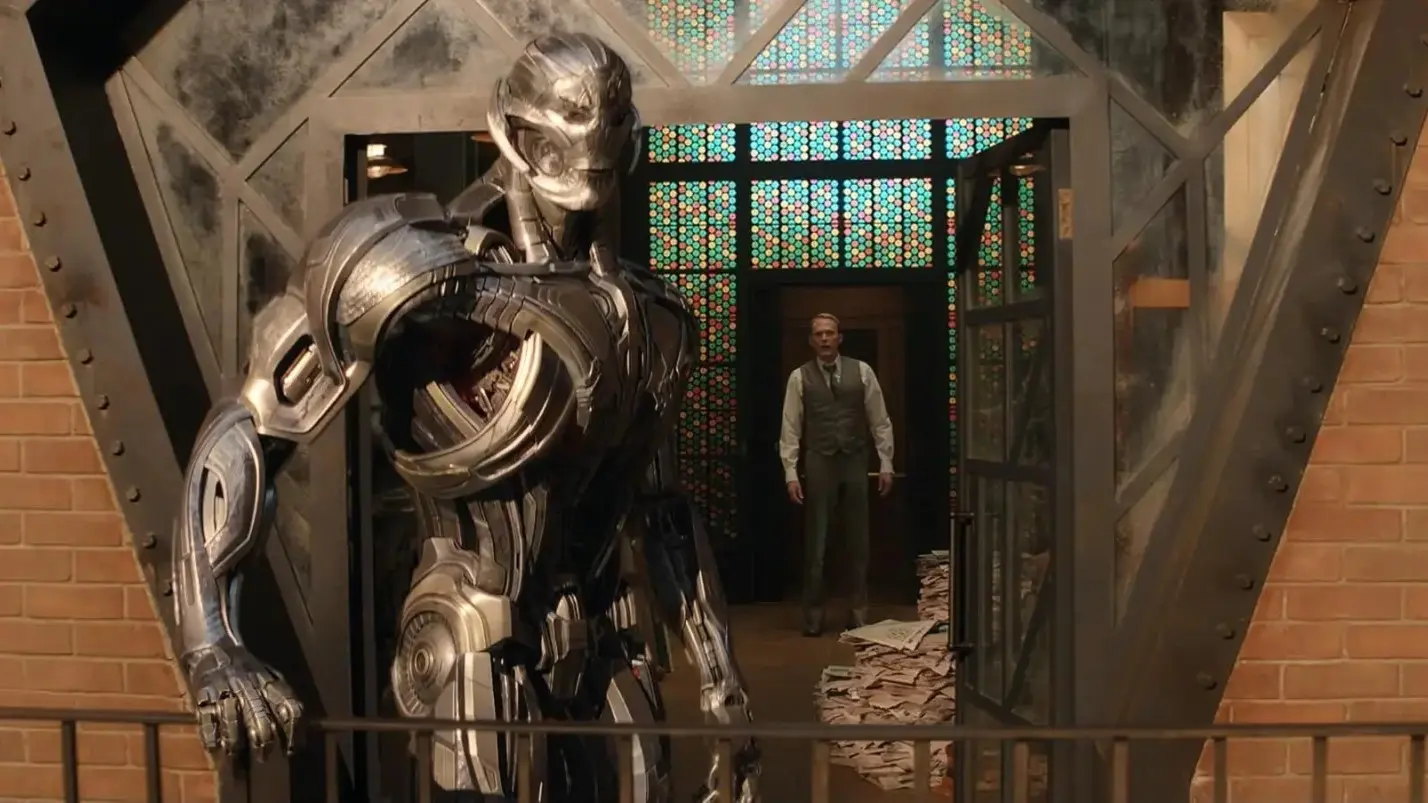
And then there’s Ultron. With J.A.R.V.I.S. gone, Ultron is no longer completely cut off from Vision. He’s still trapped within Vision’s mind, but he can now communicate with him, bringing James Spader’s familiar voice back into the story. It’s an unsettling development, to say the least. Ultron was responsible for creating Vision’s original body, and he may try to use that connection to present himself as something like a father figure. But given his history, there’s little reason to take any advice he offers at face value.
Ultron Could Become Vision’s Biggest Problem
Ultron’s return opens up an interesting question: can Vision trust anything that comes from the intelligence that helped bring him into existence? Ultron knows more about Vision’s origins than almost anyone, which gives him a potential advantage. He may be able to offer answers Vision desperately wants, but that doesn’t mean his intentions are anything close to harmless.
The episode also brings up the original Human Torch, J.I.M., as the other artificial intelligences warn about the dangers of an AI becoming too emotionally involved. That detail adds another layer to Vision’s situation. He’s already trying to understand his own identity while dealing with the loss of J.A.R.V.I.S., and now he has Ultron in his head, someone who could exploit his uncertainty for his own purposes.
Tommy could complicate things further. Vision’s desire to protect the boy may help him reconnect with the human side of himself, but caring about someone also gives others a way to manipulate him. Ultron may see that vulnerability as an opportunity, especially if he can convince Vision that he understands him better than anyone else does.
What Episode 2 Means for the Rest of VisionQuest
“ Theseus” leaves both Vision and Tommy at important turning points. Tommy is beginning to piece together the strange circumstances surrounding his existence, while Vision has lost one of his oldest allies and gained an unsettling new voice in his mind. Neither of them has an easy path ahead, and their stories seem likely to become more closely connected as the series continues.
The episode also reinforces how much VisionQuest owes to the events of WandaVision and Agatha All Along. The consequences of Wanda’s actions and Billy’s attempt to find his brother are still unfolding, even as Vision deals with the consequences of his own complicated creation. With J.A.R.V.I.S. gone and Ultron back in the picture, the question is no longer just whether Vision can figure out who he is. It’s whether he can do that without letting someone else decide what he should become.